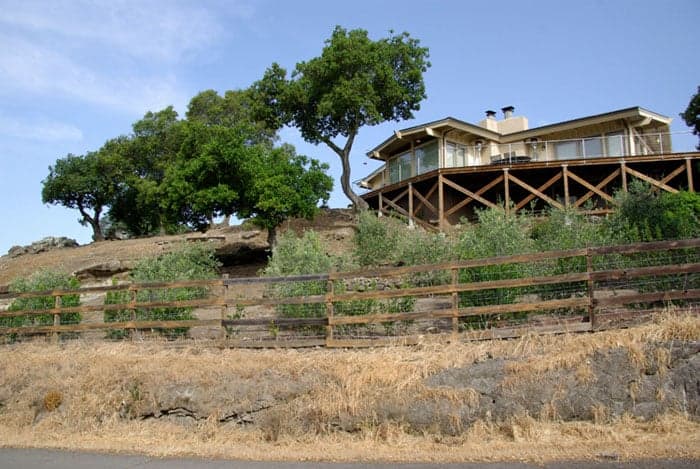
Quick Answer: A large share of Sonoma County sits inside a designated fire hazard severity zone, and homes there deserve a different kind of look. I evaluate the roof, vents, siding, decks, and the immediate surroundings the way fire actually behaves, because I spent years as a firefighter and I've seen what embers do. If you're buying in a wildfire-prone area, your inspection should reflect that.
Wildfire Is Part of Buying a Home Here Now
The Tubbs Fire in 2017 changed how people in Sonoma County think about houses. Coffey Park and Fountaingrove burned, then the Kincade Fire came through in 2019 and the Glass Fire in 2020. Whole neighborhoods have been rebuilt since. Buyers who move here now ask questions that nobody asked ten years ago, and that's a good thing.
I came to inspections from firefighting, including time with Cazadero Fire Rescue, so this subject isn't theoretical for me. I've stood in front of homes while embers fell on them.
How Homes Actually Ignite
Most homes lost in wildfires don't burn because a wall of flame reached them. They burn because embers landed somewhere receptive. Embers can travel a mile or more ahead of a fire, and they find the weak points:
- Attic and crawlspace vents without ember-resistant screening
- Gutters packed with dry leaves and needles
- Wood fences that run right up to the siding
- Decks with debris underneath and dry vegetation beside them
- Openings under roofing at the eaves and ridges
That's the lens I use on a wildfire-zone inspection. Not panic. Pathways.
What I Look At on a Wildfire-Zone Inspection
Roof and gutters
The roof covering matters most. Class A roofing, meaning most composition shingle, tile, and metal, resists ember ignition well. Wood shake does not. I also note debris accumulation, because a clean Class A roof and a gutter full of pine needles are two different houses.
Vents and openings
I check whether attic, eave, and foundation vents have fine metal mesh, ideally 1/8 inch, or ember-resistant designs. Old quarter-inch screen lets embers straight into the attic. This is one of the cheapest upgrades a homeowner can make, and one of the most common gaps I find.
Decks, fences, and attachments
A wood fence attached to the house is a fuse. So is a deck over dry grass. I look at what's connected to the structure and what's stored underneath it.
Siding and eaves
Open eaves, gaps in siding, and combustible materials near grade all give embers somewhere to lodge. On hillside homes around Glen Ellen, Kenwood, and the Mark West corridor, I pay extra attention to the downhill side, since fire runs uphill.
The first five feet
California's defensible space rules now emphasize Zone 0, the five feet closest to the structure. Bark mulch against the siding, junipers under windows, firewood stacked on the porch. I call these out because they're fixable in a weekend.
Rebuilt Homes Are a Different Story
If you're buying a home rebuilt after 2017 in Coffey Park, Fountaingrove, or the Mark West area, it was likely built to Chapter 7A, California's ignition-resistant construction standard. That's a real advantage. It's still a house, though, and new construction has its own defects. I inspect rebuilt homes with the same thoroughness as any new build, because builder shortcuts don't care what the house survived.
The Insurance Reality
Insurance availability in high fire risk areas is a genuine challenge in Sonoma and Marin County right now. Some buyers end up on the California FAIR Plan, and many insurers send their own inspectors before binding coverage. I can't promise any home will be insurable. What I can do is document the condition of the roof, vents, defensible space, and hardening features so you and your agent know where the property stands before you commit.
FAQ
How do I find out if a home is in a fire hazard severity zone?
CAL FIRE publishes hazard severity zone maps, and both Sonoma and Marin County have online GIS tools where you can look up a parcel. Your agent can pull this too. Check before you fall in love with the house.
Will an inspection guarantee I can get insurance?
No. Insurers make their own decisions. A detailed inspection report gives you a clear picture of the home's condition and hardening so there are fewer surprises during that process.
What's the most cost-effective hardening improvement?
Ember-resistant vents, clean gutters, and clearing the first five feet around the structure. None of these are expensive, and together they close off the most common ignition paths.
Do you inspect homes that survived a nearby fire?
Yes, and carefully. Heat exposure can damage siding, windows, and roofing in ways that aren't obvious from the street.
Related Reading
- How the Scent of Rain Uncovers Hidden Roof Leaks Before They Cost You Thousands
- Septic Systems and Wells: What Rural Sonoma County Buyers Need to Know Before Closing
- Inspecting Wine Country Estates: Outbuildings, ADUs, and Acreage Properties
- The Myth of the Perfect Home: Why Every Property Has a Story to Tell
Buying in a Fire Zone? Bring a Firefighter's Eyes
I'm Juan de la Cruz, owner of Buy Wise Inspections, a Board Certified Master Inspector certified by InterNACHI and the International Code Council, and a former firefighter. I inspect homes throughout Sonoma County and Marin County, from Santa Rosa and Healdsburg to Novato and Mill Valley.
Call 707.326.6115 or email juan@buywiseinspect.com to schedule. You'll understand the house, not just receive a report.