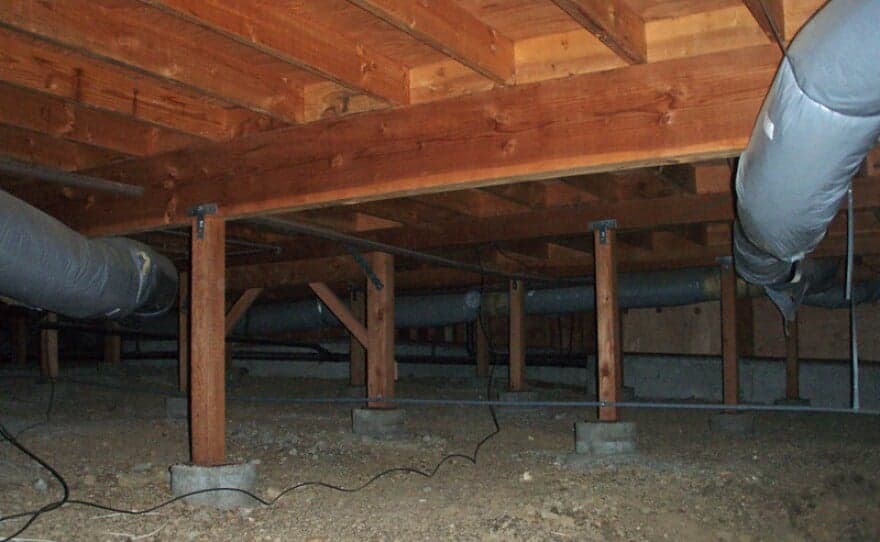
Quick Answer: Many homes in Sonoma and Marin County built before 1980 were never bolted to their foundations, and plenty still have unbraced cripple walls under the living space. During an inspection I get into the crawlspace and check whether seismic retrofit work was done and whether it was done correctly. If you're buying an older home in the North Bay, that answer belongs in your decision.
We Live in Earthquake Country, Whether We Think About It or Not
The Rodgers Creek Fault runs through the east side of Santa Rosa. The San Andreas runs along the west Marin coast, past Tomales Bay and Point Reyes. Santa Rosa took serious damage in 1906 and again in 1969. That's not fear talk. It's geology, and it shapes how I look at every older home from Petaluma to San Rafael.
Here's what most buyers don't realize. The biggest earthquake risk for a typical wood-framed house isn't collapse. It's the house sliding off its foundation, or the short wall between the foundation and the floor folding sideways. Both failures are preventable, and the work that prevents them is modest compared to the cost of repairing a house that moved.
What a Seismic Retrofit Actually Includes
For most single-family homes in the North Bay, a retrofit comes down to three things:
- Foundation bolting. Anchor bolts or retrofit foundation plates that tie the wood sill plate to the concrete foundation.
- Cripple wall bracing. Plywood panels nailed to the short stud walls in the crawlspace so they can't rack sideways during shaking.
- Shear transfer hardware. Clips and connectors that tie the floor framing to the braced walls so the whole load path works together.
Strapping the water heater counts too. An unstrapped water heater can tip over in a quake, break its gas line, and start a fire. I flag that one constantly.
What I Check During an Inspection
When I inspect an older home in Santa Rosa, Petaluma, Sebastopol, or San Rafael, the crawlspace tells me the story.
Bolting
I look for anchor bolts or retrofit plates along the sill. Pre-1950s homes often have none at all. Homes from the 50s through the 70s may have a few bolts, spaced too far apart by today's standards.
Cripple walls
If the house has a crawlspace with short framed walls, I check for plywood bracing. Bare studs with nothing but siding on the outside are the classic weak point.
The foundation itself
Bolting only helps if the concrete is worth bolting to. Older unreinforced foundations, brick footings, or badly deteriorated concrete change the conversation. I've written about what foundation cracks mean in another post, but in earthquake terms, a failing foundation needs attention before any hardware goes in.
Quality of past work
Plenty of retrofits I see were done halfway. Bolts without plate washers, plywood with too few nails, bracing on one side of the house only. A receipt that says "seismic work" doesn't tell you what actually got done. The crawlspace does.
Which North Bay Homes Concern Me Most
A few patterns come up again and again:
- Hillside homes in Mill Valley, Sausalito, and Fairfax, where tall posts and stepped foundations carry the load
- Living space over a garage, the classic soft-story layout
- Pre-1940 homes in the older Petaluma and Santa Rosa neighborhoods with brick or shallow foundations
- Post-and-pier homes in west county, which have no continuous foundation to bolt to
None of these are reasons to walk away. They're reasons to know exactly what you're buying before you sign.
Retrofits, Insurance, and Resale
A documented retrofit can earn a discount on California Earthquake Authority coverage, and the state's Earthquake Brace + Bolt program has offered grants toward the work in many North Bay zip codes. On resale, a verified retrofit is a genuine selling point here. Buyers ask about it more every year.
FAQ
How can I tell if a home has been retrofitted?
Sometimes the seller's disclosures say so, or there's a permit on file with the county. The reliable way is a crawlspace inspection. I photograph the bolting and bracing so you can see exactly what's there.
How much does a retrofit cost?
For a straightforward bolt and brace job on an accessible crawlspace, contractors in our area often quote a few thousand dollars. Hillside homes and soft-story conditions cost more. Compare that to foundation repair after a quake, which can run into six figures.
Is a seismic retrofit required to buy or sell a home?
No. There's no point-of-sale retrofit requirement in Sonoma or Marin County. It's a judgment call, which is exactly why you want clear information before you close.
Do newer homes need retrofits?
Homes built from the 1980s onward were generally constructed with bolting and bracing from the start. I still verify, because I've seen exceptions.
Related Reading
- Your Foundation: What Those Cracks Are Really Telling You
- Why Older North Bay Homes Need a Different Kind of Inspection
- The Myth of the Perfect Home: Why Every Property Has a Story to Tell
- Home Inspections for Luxury Homes in Sonoma and Marin County
Buying an Older Home in Earthquake Country? Let's Look Together
I'm Juan de la Cruz, owner of Buy Wise Inspections and a Board Certified Master Inspector, certified by InterNACHI and the International Code Council, with a background in firefighting and code compliance. I inspect homes throughout Sonoma County and Marin County, and I get into every crawlspace I can fit into.
Call me at 707.326.6115 or email juan@buywiseinspect.com to schedule your inspection. You'll understand the house, not just receive a report.